RFID Electronic Tags
• Chip Technology: Dedicated chip solution, operating frequency HF 13.56MHz or UHF 860-960MHz.
• Communication Protocol: Supports ISO/IEC 14443 or EPC Gen2, anti-static design, does not affect electronic product performance.
• Identification Performance: Reading distance 0-10cm (HF) or 1-5 meters (UHF), supports rapid inventory counting.
• Material Process: PET film, thickness 0.1-0.3mm, highly durable, adaptable to various application environments.
• Customization Services: Supports customized size, printing, and functions.
• Company Advantages: WS RFID provides a complete solution from tag production to system integration.
• Quality Certification: Certified by the industry, RoHS, REACH, etc. • DPP-Compatible RFID tags
• Lead Time: 5-7 days for in-stock products; 10-12 days for products not in stock.
• Application Value: Improves management efficiency, reduces labor costs, and enables intelligent management.
RFID Electronic Tags for Retail & Asset Tracking — Batch Reading, Full Customization
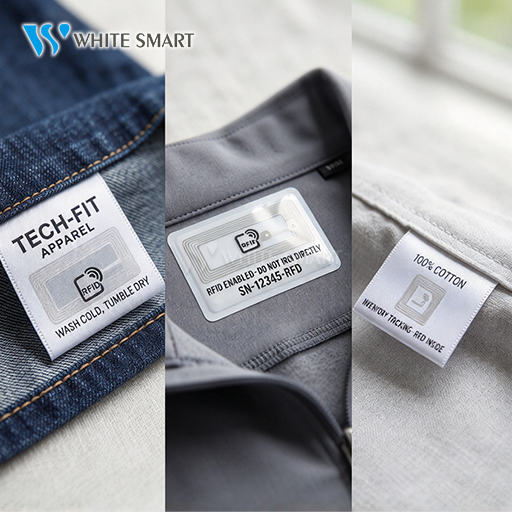
RFID Electronic tags are data carriers containing an integrated circuit and an antenna that connect with electromagnetic fields. They do not require line-of-sight scanning, hence they are far better suited for automated inventory and asset management than barcodes. Since 2008, WS RFID has been producing RFID systems from its 10,000+ sqm plant, with an annual output of more than 500 million units. Tags are based on 0.1-0.3 mm PET film and operate at HF 13.56 MHz or UHF 860-960 MHz.
What Are RFID Electronic Tags and How Do They Work?
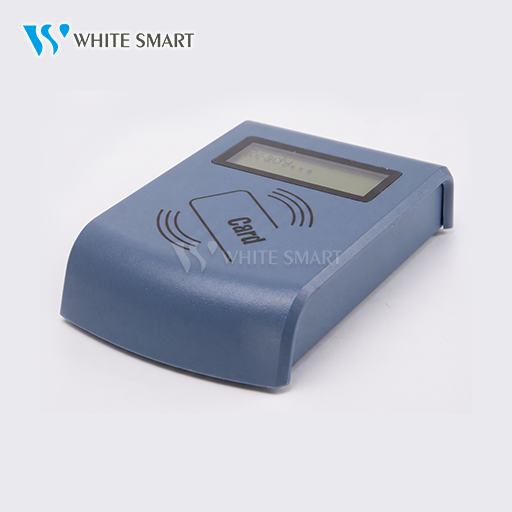
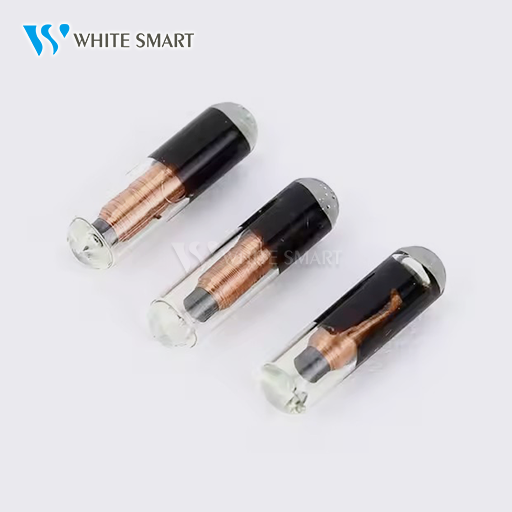
Tags include an antenna and an IC chip. The scanner emits an electromagnetic field and the tag responds with the information recorded on it. Passive kinds don’t need a battery.
Contactless communication lowers mistakes in manual data input and reduces the effort involved in conventional stock-taking. It allows you real-time insight throughout contemporary supply chains and delivers a digital identification to every physical product.
WS RFID tags are anti static so they do not interfere with the operation of electronic equipment. They are compatible with ISO/IEC 14443 (HF) and EPC Gen2 (UHF) protocols, a helpful trait for consumer electronics buying.
Key Technical Specifications
| Parameter | Details |
|---|---|
| Operating Frequency | HF 13.56 MHz / UHF 860–960 MHz |
| Communication Protocol | ISO/IEC 14443 / EPC Gen2 |
| Reading Distance | 0–10 cm (HF) / 1–5 m (UHF) |
| Storage Capacity | 96 bit / 128 bit / 512 bit EPC; user area optional |
| Data Retention | 10+ years; 100,000+ write/erase cycles |
| Operating Temperature | −40 °C to +85 °C |
| Material | PET film, thickness 0.1–0.3 mm |
| Size Options | Micro to large; fully customizable |
| Installation Methods | Adhesive, sewing, riveting, hanging |
| Chip Models | Impinj Monza, Alien Higgs, NXP UCODE |
Why Choose WS RFID Electronic Tags
The chip. Impinj, Alien and NXP WS RFID chips. These chips are used in UHF readers which can read 700-1,000 tags a second utilising anti-collision algorithms.
QA. Each tag is checked for read sensitivity, flip-chip bond strength, environmental stress screening (temperature cycling, salt spray) and 100% EPC encoding verification to assure no duplicate IDs. These methods are consistent with GS1 and ISO/IEC 18000-6C. Defect rate under 0.5%.
DPP readiness. These tags comply with the Digital Product Passport laws, an essential need for businesses who operate in regulated markets like the EU.
Data privacy. High-end chip combinations with AES-128 encryption and password protected Lock and Kill instructions.


Product Advantages
- Batch Reading Speed: UHF anti-collision algorithms allow 700-1,000 tags/sec reading and allow pallet level counting without removing product from cartons.
- Durability: PET film structure can tolerate temperatures from -40 °C to +85 °C. High humidity, high heat or chemically severe environments special versions are available.
- Cost per unit: Due to the utilisation of mass production methods, each unit produced is competitively priced. The reduction of manual labour offers a real return on investment.
- System Compatibility Tags work with existing ERP and warehouse management systems. WS RFID provides software SDKs and remote integration assistance.
- Low entry point: MOQ from 500 units, suitable for trial projects or new product lines.

Application Scenarios
RFID electronic tags of WS RFID are used in many different fields.
Retail: stock management, real-time inventory, anti-theft technologies. These tags are anti-static so they may be put directly to electronics packaging without damage.
Warehousing & Logistics: Inbound/outbound management, commodity monitoring and inventory management UHF tags can scan whole pallets in bulk without opening containers.
Production line work in progress tracking for manufacturing Anti-metal versions provide good read performance in high EMI environment and component traceability.
IT Assets Office Equipment and Fixed Assets Asset Management In data center environments, RFID tags are used for rack level audits when manual scanning is not feasible.
Cold Chain: Used in conjunction with temperature-sensing chips, Tags may be used to monitor thermal excursions in transit for medicines or food, so you know whether you’re in compliance with applicable safety requirements.
Government, Education and Business Offices The HF read range of 0-10 cm enables precise item level management for library resources, lab equipment, records administration and document monitoring.

Customization and Service
RFID electronic tags handles the entire customisation process from the antenna design to the chip encoding, variable data printing and final form factor. You choose size, shape, mounting method and frequency spectrum.
Functional samples within 7 working days. Ships 5-7 days if in stock, 10-12 days if out of stock. Samples previously available are offered free of charge.
All items are guarantyd for 1 year and certified to ISO 9001:2015, CE, FCC, RoHS and REACH.

FAQ
Q1: What is the difference between active and passive RFID tags?
A: Passive tags are powered by the electromagnetic field of the reader, no battery, low cost, long life. Active tags have their own power source, which extends the read range and enables them to log sensor data. The vast majority of applications for retail and asset tracking use passive UHF tags.
Q2: Can RFID tags be read through metal or liquid?
A: In such scenarios, traditional tags are vulnerable to interference. WS RFID is offered in specialised anti-metal and anti-liquid versions, with spacers or modified antenna designs to ensure reliable read performance.
Q3. How many tags can be read together?
A: UHF scanners can read 700 to 1,000 tags per second, and anti-collision algorithms make batch counts in a warehouse possible without removing objects from shelves or containers.
Q4: Are the data on these tags safe?
A: The high-end chips include AES-128 encryption and Lock and Kill commands with password security to prevent unauthorised data readings or overwrites.
Q5: How long does a passive tag last?
A: The chip and antenna are rated for data retention of 10+ years and 100,000+ write/erase cycles provided the physical case is not affected.
Q6: How can the products be linked to an existing ERP system?
A: WS RFID offers software SDKs, technical development assistance and remote integration support to connect tag data to your existing ERP or warehouse management system.
Contact Us
Do you have more questions about RFID Electronic Tags? Send your sample request, quantity, or custom spec to kenny@w-srfid.com and our team will respond with pricing and lead time details.