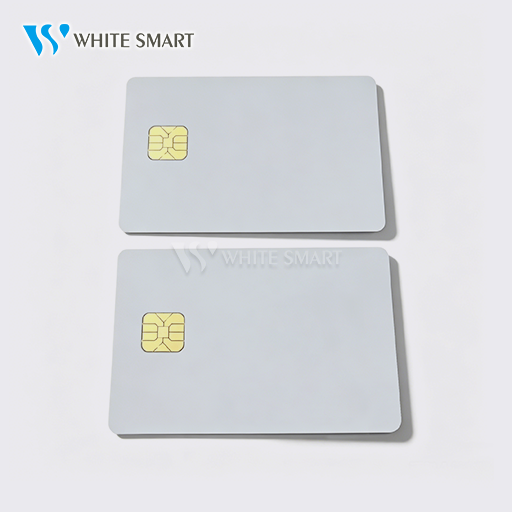
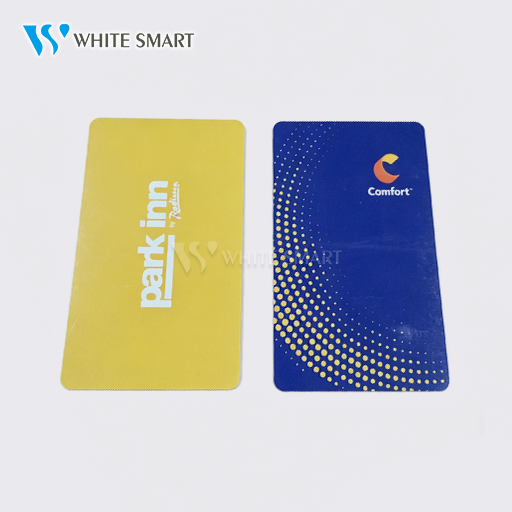
Dual Interface Smart Card
• Chip Technology: RFID technology, operating frequency 13.56MHz (contact + contactless).
• Communication Protocol: Supports ISO14443 standard, compatible with mainstream card readers.
• Material & Process: High-quality PVC material, thickness 0.76-0.84mm (standard thickness).
• Customization Services: Supports brand logo printing, personalized coding, and custom sizes.
• Security Features: Encrypted data transmission, anti-copying and anti-cloning, secure and reliable.
• Company Advantages: WS RFID provides one-stop service from chip selection to finished product delivery.
• Quality Certification: Passed RoHS, REACH, and other international environmental certifications.
• Lead Time: 5-7 days for in-stock products; 10-12 days for products not in stock.
• Application Scenarios: Hotel access control, corporate attendance systems, residential community access control, etc.
Dual Interface Smart Card for Access Control — Contact & Contactless in One Card
Dual Interface Smart Cards are conventional CR80 format cards with a single shared chip that supports both contact (ISO/IEC 7816) and contactless (ISO/IEC 14443) communication. WS RFID has been manufacturing RFID smart cards out of a 10,000+ sqm facility since 2008. These cards are designed for use in access control, time and attendance, and multi-modal identification applications where older contact readers and current contactless terminals need to function on the same credential.
How This Card Works Differently from a Standard RFID Card?
Most access control cards work with just one kind of communication. When organisations need to deploy vintage contact readers and modern contactless terminals, they generally have to issue two different cards or overhaul the whole infrastructure – both expensive and operationally disruptive.
This Dual Interface Smart Cards tackles it head on. Both interfaces are handled at the same time by single chip and shared memory. Data is always synchronised across contact and contactless modes, so there is no credential mismatch when a cardholder transfers from one reader type to another inside a single facility.
Technical Specifications
| Parameter | Specification |
|---|---|
| Standard Size | CR80 — 85.5 × 54 mm |
| Thickness | 0.76 – 0.84 mm |
| Operating Frequency | 13.56 MHz (Contact + Contactless) |
| Communication Protocol | ISO/IEC 7816 + ISO/IEC 14443 |
| Read/Write Distance | Contact + 0–10 cm (contactless) |
| Storage Capacity | 1 KB / 4 KB / 8 KB EEPROM (optional) |
| Data Retention | 10+ years; 100,000+ write/erase cycles |
| Operating Temperature | -25°C to +70°C |
| Material | PVC |
| Printing Process | Offset, screen, digital — full-color CMYK |
| Chip Options | NXP Mifare, Desfire, Ntag, ICODE, Hitag, Fudan, Huada |
Key Dual Interface Smart Card Features
Single Chip, Two Interfaces
The card automatically senses whether a contact or contactless reader is being used and reacts appropriately. No need to toggle between manual modes. Both interfaces are connected to the same chip and memory. This allows data written via the contact interface to be instantly accessible through the contactless interface and vice versa.
Inductive Coupling Antenna Coupling
The chip module is coupled to the internal antenna inductively – a magnetic field connection, rather than a solder bond. This eliminates the most frequent failure spot in RFID cards. The antenna connection is resistant to repetitive bending, twisting and mechanical stress caused by regular usage in high-traffic areas.
Cryptographic Protection at Each Side of the Interface
Both touch and contactless communications are processed by the same cryptographic processor. The data transfer is encrypted, and card is made with anti-copying and anti-cloning features at chip level.
Universal Chip Compatibility
Chip platforms include NXP Mifare, Desfire, Ntag, ICODE, Hitag, Fudan Microelectronics and Huada Electronics. It is contingent upon the reader infrastructure you already have and what systems you need to integrate with.

Quality Control Standards
Each manufacturing batch is inspected at many stages by WS RFID. Key tests are:
- ISO 10373-1 Dynamic Torsion and Bending Tests: Cards should withstand 2,000 stress cycles without breaking the antenna
- Peel Strength Testing Laminate layer separation resistance must be ≥ 0.35 N/mm
- Resonant Frequency and Q-factor Measurement: Uniform contactless read range across various reader types
- X-Ray Inspection Detects interior micro-cracks, misalignment or antenna shorts
- Thermal Cycling: Simulation from -40°C to +85°C for ruggedness for transportation and climate worldwide.
The manufacturing line is entirely automated, with a fault rate of less than 0.1%. WS RFID is certified ISO 9001:2015, RoHS, REACH, CE, FCC and POPs.

Where This Card Is Used?
This Dual Interface Smart Card is appropriate for access control and identification situations that include both contact and contactless infrastructure:
- Corporate offices: Employee attendance monitoring, access to floors and lifts
- Residential neighbourhoods: Resident check-in, Guest registration
- Campus management: Student ID card, dormitory access
- Parking Systems Control of vehicle entrance and parking spaces
- Industrial parks: Access to production areas, equipment handling
- Government buildings: Secure area control, document management
- Financial institutions Vault entrance, high security zone access
- Hotels: Front desk check-in systems, guest room access
The contactless interface also provides high-speed throughput for transportation and e-ID situations such as subway gates or border crossing kiosks. The contact interface immediately links to PC networks and government terminals.

Customization and OEM/ODM Services
WS RFID oversees the whole manufacturing process, from chip selection to delivery of the final card. You may customise it to:
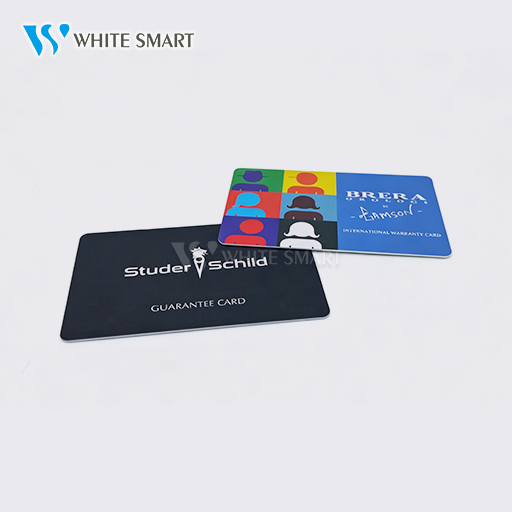
- Full colour CMYK offset, screen or digital printing of your brand logo
- Custom chip programming and data initialisation
- Custom designed cards & packaging
- Specific system need based special function card development
- Help for integrating with current access control and management systems
MOQ is 500pcs and above. Functional samples are available in 7 business days. Free existing samples are accessible; bespoke samples are handled on a case by case basis.

FAQ
Q: What's the difference between a dual-interface card and a hybrid card?
A: A dual-interface card employs one chip for both touch and contact-less communication. The data is stored in just one place, therefore it is always synchronised. A hybrid card has two distinct chips, and this might lead to data inconsistency if both chips are not updated simultaneously.
Q: Will mobile phone signals destroy the card?
A: These cards have been built for electromagnetic compatibility and are not affected by normal cellular frequencies.
Q: How does WS RFID avoid cracking of the internal antenna?
A: The antenna and chip module are connected using inductive coupling rather than actual solder connections. This magnetic field connection is more resistant to mechanical stress from bending and twisting than a direct solder bond.
Q: Are both interfaces on the same security level?
A: The cryptographic processor used for touch and contactless modes is the same. Therefore, the encryption used for transmitting the data does not differ dependent on the interface in use.
Q: How long will a dual-interface card last?
A: Functional life of these cards is 5 to 10 years, data retention is over 10 years and 100,000+ write/erase cycles under typical use circumstances.
Q: What chip options are available?
A: NXP Mifare, Desfire, Ntag, ICODE, Hitag, Fudan Microelectronics, Huada Electronics are supported platforms. The best solution relies on your reader infrastructure and your system compatibility needs.
Contact Us
Do you have more questions about Dual Interface Smart Card? Request a sample or get a quote for your project — email kenny@w-srfid.com.