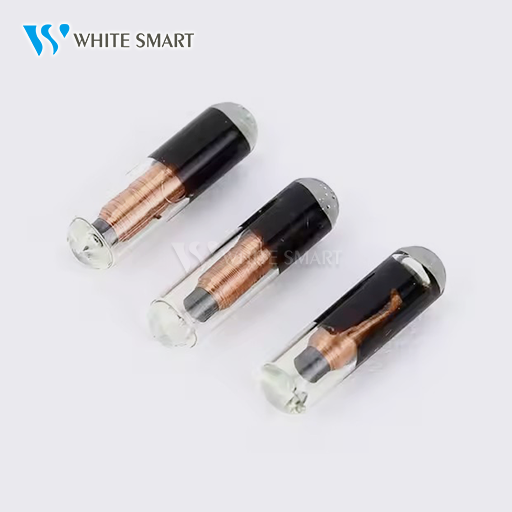
UHF Ear Tags
• Chip Technology: Operating frequency 860-960MHz, supports EPC Gen2 international standard.
• Communication Protocol: ISO 18000-6C, compatible with global UHF readers.
• Identification Performance: Long-distance reading 2-10 meters, supports rapid batch inventory management.
• Materials and Craftsmanship: Imported TPU material, soft and durable, comfortable for animals to wear.
• Customization Services: Supports different sizes, frequency tuning, and personalized coding.
• Company Advantages: WS RFID provides comprehensive solutions for animal ear tags.
• Quality Certifications: RoHS, REACH, and international animal identification certifications passed. • DPP-Compatible RFID tags
• Lead Time: 5-7 days for in-stock products; 10-12 days for products not in stock.
UHF Ear Tags for Livestock Management: Long-Range RFID Animal Identification Solutions
UHF Ear Tags operate in the 860–960 MHz band according to the ISO 18000-6C (EPC Gen2) standard with a read distance of 2–10 meters, and they may scan many animals simultaneously in batch mode. They are made from imported TPU, are rated IP67, and operate from −40°C to +85°C. Since 2008, WS RFID has been developing RFID solutions, and the tags come in basic and completely customised versions to fit the needs of varied herd sizes and management systems.
How UHF Ear Tags Differ from Traditional Low-Frequency Options?
Standard low frequency (LF) ear tags need close range, one-by-one scanning. That’s a slow and labour-intensive process at any meaningful scale.
UHF Ear Tags transform the flow of work. Handlers don’t have to touch each animal as they walk through a gate, and a stationary reader can scan a group of animals in seconds. This removes the requirement for squeezing chutes and decreases the time spent on regular inventory.
The EPC Gen2 anti-collision protocol allows for the reading of more than 100 tags per second. That throughput is a real shift in daily labour needs for businesses dealing with big numbers of animals.
Technical Specifications
| Parameter | Details |
|---|---|
| Operating Frequency | 860–960 MHz (UHF) |
| Communication Protocol | ISO 18000-6C, EPC Gen2 |
| Reading Distance | 2–10 meters |
| Storage Capacity | 96-bit / 128-bit / 512-bit EPC (optional) |
| Material | Imported TPU |
| Temperature Range | −40°C to +85°C |
| Waterproof Rating | IP67 |
| Installation Method | Ear tag clamp |
| Size | Standard or custom |
| Chip Models | Impinj Monza, Alien Higgs, NXP UCODE |
Performance Characteristics
Read range – The 2-10 metre range allows for broad gate scanning without needing any infrastructure upgrades at most current facilities.
Batch identification – EPC Gen2 anti-collision algorithms enable several animals to be detected in a single pass by a single scanner, eliminating the need to scan each animal individually during regular counts.
Tag Durability Soft imported TPU bends with animal movement instead of shattering. This minimises tag loss over time and lowers irritation of the tissue.
System Compatibility EPC Gen2 and ISO 18000-6C compliant, these tags are compatible with most UHF reader systems currently implemented in key markets.
Material resilience – TPU resists UV degradation, typical agricultural disinfectants and contact with animal faeces. ID markers are laser printed or engraved and remain readable under prolonged field conditions.

Quality Control Process
Before every manufacturing batch ships, WS RFID performs five checks:
- Retention rate testing — Tensile tests demonstrate the locking mechanism is strong under pulling power, avoiding unintentional loss in active animals.
- Read range stability - Anechoic chamber test verified to exhibit consistent sensitivity throughout the entire 860-960 MHz band.
- Accelerated ageing — Xenon arc weatherometer tests simulate long-term UV exposure to verify the TPU remains flexible, not brittle.
- Chemical Resistance - Tags are tested for ammonia and synthetic sweat to make sure the printed or engraved IDs will be visible after repeated exposure.
- Chip programming verification - We do 100% data integrity checks on each batch of manufacture to ensure there are no duplicate EPC codes.
Tags are compliant to RoHS and REACH. This product is intended to function within the animal identification requirements defined by ISO 11784/11785.

Application Areas
Livestock & Ranch Management – Track individual cows, lambs or pigs through the whole life cycle, from birth records to slaughter documents.
Feedlot inventory – Gate-mounted readers eliminate laborious daily counts and feed data straight into your management system.
Slaughterhouses and cold chain – Tags endure high pressure washing settings and provide tracing from live animal to corpse processing.
Pet registration – A single tag ID may be connected to immunisation records and registration databases, streamlining clinic and regulatory processes.
Zoos and studies Facilities: Individual identification facilitates feeding plans, behavioural studies, and population records without recurrent physical handling.
Remote pasture monitoring – UHF Ear Tags may be used with gate readers or mobile scanning equipment to identify animals in places where manual counting would be challenging.

Customization and OEM Support
WS RFID provides comprehensive bespoke setups for this product line:
- Custom sizes for varied breeds & thickness of ears
- Frequency tweaking to meet particular geographical needs
- Personalised Chip Coding and Variable Data Printing
- Chip options: Impinj Monza, Alien Higgs, NXP UCODE etc OEM and ODM services with prototype in 7 working days
Minimum order quantity is 500 pieces. Lead time for in-stock is 5-7 days. Non-stocked configurations need 10-12 days to produce. Samples available for free – contact us to get yours.

FAQ
Q: Does animal tissue interfere with UHF signal?
A: Water in animal tissue absorbs some UHF energy. Purpose-designed products use antenna geometries that account for body proximity, maintaining usable read distances when the tag is positioned at the ear.
Q: Can these tags run alongside an existing LF system?
A: Yes. Many operations use dual-frequency tags or hybrid readers to maintain compliance with LF-based regulatory standards while adding UHF scanning capability for daily management tasks.
Q: What is the most common cause of tag failure?
A: Mechanical damage from snagging is the primary failure mode in field use. The high-toughness TPU construction allows the tag body to flex under stress, which reduces breakage compared to harder materials.
Q: Do the chips support access control?
A: Most UHF chips in this product line support password protection for Kill and Access functions, which prevents unauthorized data modification or tag cloning.
Q: How do these tags perform in rain or mud?
A: The IP67 rating means the chip is protected against moisture ingress. Heavy mud coating may reduce maximum read distance, but does not cause read failure under normal operating conditions.
Q: What memory configurations are available?
A: EPC memory options are 96-bit, 128-bit, and 512-bit, depending on data recording requirements. Custom configurations are available on request.
Contact Us
Do you have more questions about UHF Ear Tags? Reach our team at kenny@w-srfid.com to request a free sample or discuss your project requirements.