HDX/FDX Ear Tags
Operating Frequency: LF 134.2 kHz; Supports ISO 11784/11785
Medical-Grade TPU: Safe, Non-Rejective, and Implantable Design
Suitable for Individual Identification of Pets and Livestock
Read Distance: 0–1 Meter; Supports Rapid Identification
• Lead Time: 5-7 days for in-stock products; 10-12 days for products not in stock. • DPP-Compatible RFID tags
HDX/FDX Ear Tags for Animal Identification — ISO 11784/11785 Compliant LF RFID Solution
HDX/FDX Ear Tags are ISO 11784/11785 compatible RFID tags used for individual animal identification and digital tracking of cattle, pets and wildlife. Made from medical grade TPU for long term wear safety. Each tag is LF 134.2 kHz. Since 2008, WS RFID has been providing animal identification tags compatible with both HDX and FDX protocols to accommodate varied reader infrastructures and operating contexts, ranging from dairy farms to governmental traceability initiatives.
What Are HDX/FDX Ear Tags?
There are two ways of transmitting the signal : HDX ( Half Duplex ) and FDX ( Full Duplex ) . These are established in the ISO 11784/11785 standard for animal identification .
HDX technology waits for the reader signal to cease before sending data from the transponder. HDX tags have a greater effective read range and are more immune to electromagnetic interference, making them more suitable for situations with a lot of metal, such as automated weighing scales and electronic feeders.
HDX/FDX Ear Tags technology allows data to be transferred at the same time as the reader's signal, which allows for quicker data transmission. This is useful for high throughput applications such as race readers or abattoir conveyor lines where speed is more important than long read distance.
The two kinds of tags are meant to eliminate mistakes in manual record-keeping, sluggish reactions to illness because of inadequate traceability, and the labour-intensive process of moving animals by hand.
Technical Specifications
| Parameter | Details |
|---|---|
| Operating Frequency | 134.2 kHz (LF) |
| Protocol Standard | HDX or FDX, ISO 11784/11785 |
| Material | Medical-Grade TPU |
| Installation Method | Ear Tag Design |
| Read Range | 0.5–2 Meters |
| Waterproof Rating | IP67 / IP68 |
| Operating Temperature | -40°C to +85°C |
| Biocompatibility | Safe, Non-Rejective |
| ID Code | 15-Digit Global ID |
| Tag Lifespan | 10+ Years |
| Application | Animal Management |
Material and Biocompatibility
Each ear tag is covered with an outer shell of medical grade Thermoplastic Polyurethane (TPU). The material is sufficiently flexible to move with the animal’s ear, which may assist alleviate tissue stress and lessen the risk of ear necrosis when used for a long term.
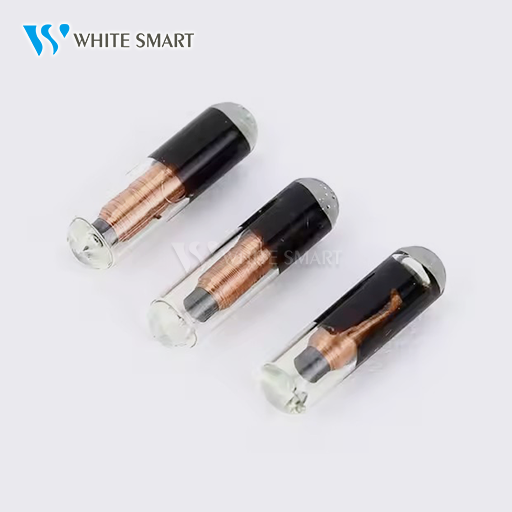
TPU is also able to tolerate UV exposure and lengthy exposure to ammonia-heavy settings such as barn floors and manure pits without substantial breakdown. The passive chip is internal and does not have a battery; it is powered by the reader’s RF field, so there are no components to corrode or deplete over time. Chips are rated for over 10 years of practical usage, which is the productive lifetime of most cattle.

Quality Control
Each batch is subject to four inspections before shipping:
1. Consistency of reading distance — HDX tags are tested to reach a minimum of 70–100 cm, and FDX tags a minimum of 30–60 cm, depending on reader output power.
2. Mechanical pull-force testing – Each tag is pulled with a tensile force between 280N and 350N to ensure it remains attached while animals walk through bush, fence or throng gates.
3. Chemical and Environmental Resistance – Accelerated ageing in ammonia rich environments and thermal cycling experiments are used to mimic long term outside exposure.
4. Data Accuracy Verification – An ID laser-etched on the tag body is 100% visually verified to ensure it matches the programd ID of the internal chip, eliminating the chance of data mismatch during a field audit or government inspection.

Application Environments
HDX/FDX Ear Tags are utilised in a variety of animal management applications:
- Dairy and Livestock Farms – Electronic milk meters and automated feeders integrated to track individual animal productivity and nutritional intake
- National Traceability Programs Government disease monitoring systems utilise these tags to track an animal's origin following a biosecurity alarm
- Smart Slaughterhouses FDX tags trace health information and genetic data for each corpse through the processing chain
- Pet Management – Pet identity, owner’s contact record, health history
- Zoos and Wildlife Research – Feeding logs, population monitoring, migratory research
- Horse Racing – Pedigree management, race records and identification verification
- Aquaculture - Records on fish management, growth monitoring and breeding environment
- Veterinary Hospitals Medical data, treatment history, and owner contact management
- Laboratories — Monitoring research data and ethical treatment of lab animals

OEM/ODM Customization
WS RFID provides comprehensive OEM and ODM manufacture for ear tags. The configuration choices are:
- HDX or FDX protocol choices as per your reader infrastructure
- Animal ID Coding in Accordance with National or Regional Numbering Formats
- Custom Colours, Laser Printing or Variable Data for Batch Coding
- Regulatory Submission Technical Documentation Packages
Functional samples may be provided in 7 working days. Minimum order quantity is 500 pieces. Orders in stock ship in 5-7 days and bespoke manufacture takes 10-12 days. Need samples or a production quote?

FAQ
Q1: Why HDX instead of FDX for walk through scales?
A: HDX tags create a stronger signal less susceptible to interference from the metal structure of the scales and motor produced electrical noise. HDX lowers data collision and read errors in congested livestock facilities with metal equipment nearby.
Q2: Can I use these tags on another animal?
A: No. These tags are intended as single use, tamper evident devices. If pulled apart, the locking mechanism irreversibly deforms, which will be identifiable and hence suitable for biosecurity and traceability integrity for reuse or transfer.
Q3: How do environmental conditions impact read performance?
A: LF signals penetrate well water and animal tissue. Read range may be decreased near high-output industrial variable frequency drives (VFDs) or big unshielded metal plates. Most real-world interference problems are solved by proper reader location.
Q4: Do these tags work with all RFID readers?
A: These tags will work with any reader that supports ISO 11784/11785, no matter the brand or manufacturer.
Q5: How long does the internal chip last?
A: The passive chips inside the products are batteryless and are rated to last for more than 10 years, the entire productive lifetime of most farm animals.
Q6: What is min order quantity and lead time?
A: Minimum order: 500 pieces. Stock products ship in 5-7 days. Custom 10 to 12 days. Current samples are supplied free of charge, bespoke samples are handled on a case by case basis.
Contact Us
Do you have more questions about HDX/FDX Ear Tags? Email kenny@w-srfid.com with your application details and required quantity, and our team will follow up promptly.