RFID Animal Tags
• Chip Technology: Dedicated chip solution, operating frequency LF 134.2KHZ or UHF.
• Communication Protocol: Supports ISO/IEC 11784/11785, biocompatible materials, implantable or external.
• Identification Performance: Reading distance 0.5-3 meters, supports rapid inventory management.
• Materials and Processes: Medical-grade glass or special plastics, durable and adaptable to various application environments.
• Customization Services: Supports customized sizes, printing, and functions.
• Company Advantages: WS RFID provides a complete solution from tag production to system integration.
• Quality Certifications: Certified by the industry, RoHS, REACH, etc.
• Lead Time: 5-7 days for in-stock products; 10-12 days for products not in stock.
• Application Value: Improves management efficiency, reduces labor costs, and enables intelligent management.
RFID Animal Tags for Livestock, Pets & Wildlife
Using Radio Frequency identifying technology, RFID Animal Tags are electronic identifying devices that store and communicate animal data. WS RFID has been developing animal tagging systems since 2008, including LF 134.2kHz and UHF 860-960MHz frequencies that meet ISO/IEC 11784/11785 standards. The product range comprises implanted glass microchips, ear tags and leg rings, and supports applications in cattle farming, pet identification, wildlife research and aquaculture.
What Are RFID Animal Tags?
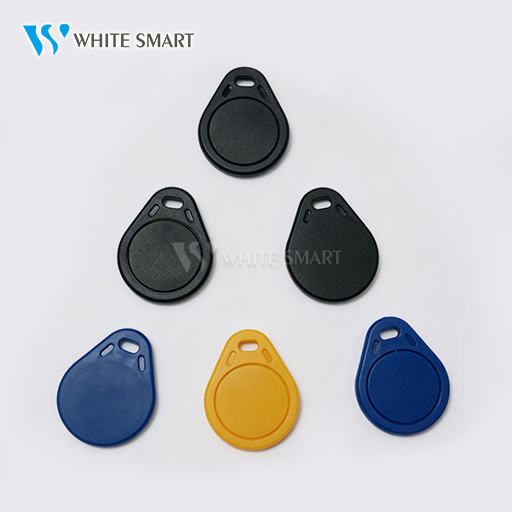
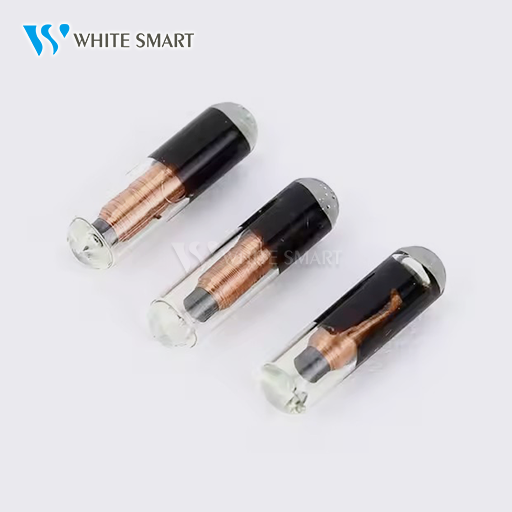
RFID animal tags are specially developed identifying devices that provide each animal a tamper-resistant identification number (UID). There are three main physical forms, they include glass encased implanted microchips, flexible ear tags and leg rings.
Such devices may help solve practical identification problems, such as inaccuracies in manual record-keeping, lack of traceability in disease studies, and the requirement to connect individual animals to veterinary or regulatory databases. They automate data collecting at the scanning site, reducing the tedious effort needed in maintaining huge animal populations.
How the Technology Works?
They are offered in two separate frequency bands for various purposes.
LF 134.2kHz is ISO 11784/11785 compliant and works well near bodily fluids and tissue. It is the default for implanted microchips and for close range person identification.
UHF 860-960MHz enables greater reading distances and is more suitable for group-level livestock inventory, automated weighing stations and feeding systems where hands-free bulk scanning is needed.
Anti-collision methods enable reading multiple tags in a single scan session. This allows for the use of batch inventories in large density livestock settings.
Materials and Construction
Material selection is application and deployment environment dependent.
- The implanted microchips are made of medical grade glass. It is biocompatible and tested according to ISO 10993 standards to reduce tissue response.
- The ear tags are made from reliable quality TPU (Thermoplastic Polyurethane). TPU is flexible, UV resistant and engineered to tolerate the physical impact of plants or feeding machinery.
- External tags for aquaculture, laboratory, and zoo settings are available in engineering plastics.
RFID animal tags are designed to survive exposure to chemicals such as ammonia and manure. Variants Applicable IP67 or IP68 Waterproof rating. RoHS and REACH compliant materials only.
Product Specifications
| Parameter | Details |
|---|---|
| Operating Frequency | LF 134.2kHz / UHF 860–960MHz |
| Communication Protocol | ISO/IEC 11784/11785 |
| Reading Distance | 0–1 m (LF); up to 3 m (UHF) |
| Storage Capacity | 96-bit / 128-bit / 512-bit EPC, user area optional |
| Data Retention | 10+ years; 100,000+ write/erase cycles |
| Operating Temperature | -40°C to +85°C |
| Material | Medical glass / TPU / Engineering plastic |
| Size | Multiple options, from micro implant to large ear tag |
| Installation Methods | Adhesive, sewing, riveting, hanging |
| Supported Chips | Impinj Monza, Alien Higgs, NXP UCODE |
| Defect Rate | Below 0.5% |
| MOQ | 500 units |
| Lead Time | 5–7 days (in stock); 10–12 days (custom order) |
| Warranty | 1 year |

Application Scenarios
Livestock & Smart Farming – UHF ear tags enable hands-free group inventory and link to automated weighing and feeding systems in cattle and swine enterprises.
Pet Identification – Implantable bio-glass microchips provide permanent ID for dogs, cats and horses. They are compatible with ordinary ISO scanners and meet the standards of international travel documents.
Wildlife and Conservation Research Small tags for migratory routes and population movement Field research recording data in lab and outdoor contexts.
Zoos and Veterinary Hospitals – Tags connect each animal with feeding schedules, medical histories, treatment logs and owner contact records to a central management system.
Aquaculture — Fish management tags monitor health information throughout production cycle, development phases and breeding habitat.
Horse Racing – Individual IDs linked to racing records and pedigree management to meet traceability and anti-fraud compliance standards.

Quality Control
Before shipping, WS RFID uses the following test procedures:
- Read Distance Verification – Each tag is verified to ensure it satisfies the minimum reading distance at numerous orientations as required.
- Pull-Force Testing – Ear tags are tested for pull-off strength under realistic field settings.
- Environmental Ageing – Salt spray, UV exposure and thermal cycling tests are used to assess long-term durability.
- The UID distinctiveness of the chip is validated at 100% including a data retention test after exposure to high pressure washing.
- Biocompatibility Validation – Implantable glass tags are verified to ISO 10993 for tissue compatibility.
Production level testing is performed on the Voyantic Tagformance systems and the Muehlbauer bonding lines.

Customization and OEM/ODM
WS RFID enables bespoke development in the following areas:
- Tag sizes, from tiny implants up to big ear tags for livestock
- Custom Printing with Sequential Numbering, Bar Codes or Logos
- Chip pre-coding and programming of variable data
- Antenna design tailored to certain reading contexts
- Support integration with ERP and agricultural management systems
- Functional prototypes in 7 working days
MOQ: 500 pcs. Samples available on request.

FAQ
Q1: Why is LF 134.2 kHz utilised for implanted tags and not UHF?
A: LF signals pass through bodily tissue and fluid more consistently than UHF transmissions. This makes LF the more consistent option for close range individual identification, whilst UHF is better suited to group scanning at a distance.
Q2. How are ear tags kept from coming out of the field?
A: Retention is dependent upon ergonomic tag design, flexible TPU material to minimise chance of snagging, and the use of proper installation equipment during application.
Q3. Is it possible to safeguard the data contained in the tag from tampering?
A: Yep. Password security and the ability to permanently lock data blocks against unauthorised alteration are supported chips.
Q4: How long will the implanted glass microchips last?
A: Glass microchips are meant to last, and they don’t have an internal battery. The length of operation varies on the kind of animal and ambient factors.
Q5: Does metal infrastructure impact UHF tag performance?
A: Metal surfaces may attenuate UHF frequencies. In areas with metal fences or equipment, versions of on-metal tags and proper placement of reader antennas may decrease interference.
Q6: What are the certifications for the products?
A: Products are ISO 9001:2015, CE, FCC, RoHS and REACH Approved. Implantable tags are biocompatibility tested according to ISO 10993.
Contact Us
Do you have more questions about RFID Animal Tags? Send your project requirements to kenny@w-srfid.com.