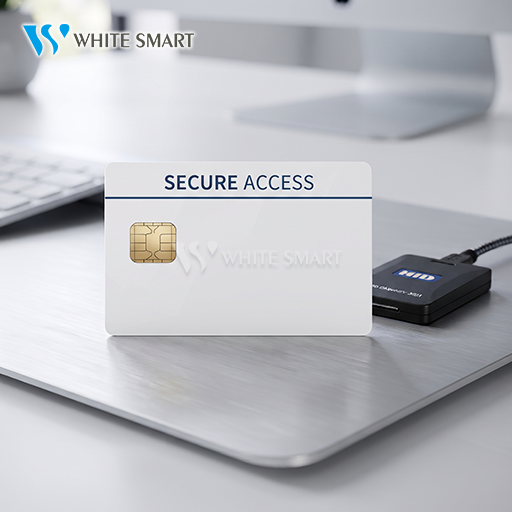
Java Chip Card
• Chip Technology: Employs a secure chip solution, operating at 13.56MHz (HF high frequency).
• Communication Protocol: Supports ISO/IEC 7816 and Java Card standards, supports Java Card applet development, and offers strong programmability.
• Security Features: DES/3DES/AES encryption algorithms, resistant to attacks and cracking, and compliant with financial security standards.
• Materials and Processes: High-quality PVC/PET material, 0.76-0.84mm thick, highly durable.
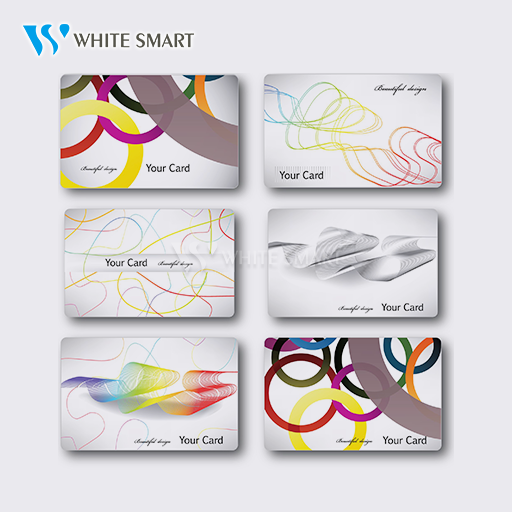
• Customization Services: Supports brand logo printing, personalized coding, and special function customization.
• Company Advantages: WS RFID provides complete solutions from chip selection to system integration.
• Quality Certifications: Certified by RoHS, REACH, and financial security authorities.
• Lead Time: 5-7 days for in-stock products; 10-12 days for products not in stock.
• Application Scenarios: Identity recognition, mobile payment, membership management, access control, and attendance systems.
Java Chip Card for Secure Identity & Payment
Java Chip Card technology allows for multi-application deployments without hardware manufacturer lock-in. It does this by running isolated applets on a smart card chip using the Java Card platform. The WS RFID implementation runs at 13.56 MHz, complies with ISO/IEC 7816, and offers DES/3DES/AES encryption and RSA and ECC cryptography. The card is available in CR80 size (85.5 × 54 mm) on PVC, PET, PC and ABS cards with EEPROM memory from 1 KB up to 72 KB.
What Is a Java Chip Card?
The Java Card platform offers a hardware-independent environment for executing tiny programs, called applets, directly on a smart card chip. Since it is based on a standardised subset of the Java programming language, developers are able to design an application once and distribute it across numerous chip architectures.
This tackles three practical issues for B2B buying:
- Dependence on hardware vendors – no lock-in to a single chip manufacturer, providing freedom to source from or change vendors.
- Data isolation between co-resident programs - The JCVM Firewall mechanism guarantees rigorous separation between applets at runtime, so one application cannot access or alter another application's data unless a purposeful sharing interface is specified.
- Card reissuance for software updates - GlobalPlatform Secure Channel Protocols (SCP02/SCP03) enable applets to be added, updated or removed remotely after the card has been issued, without changing the actual card.
Technical Specifications
| Parameter | Details |
|---|---|
| Standard Size | CR80 — 85.5 × 54 mm |
| Thickness | 0.76–0.84 mm |
| Operating Frequency | 13.56 MHz (HF) |
| Communication Protocol | ISO/IEC 7816, Java Card Standard |
| Read/Write Distance | Contact; 0–10 cm (contactless) |
| Storage Capacity | 1 KB / 4 KB / 8 KB / 72 KB EEPROM (optional) |
| Security Certification | Common Criteria EAL4+ |
| Data Retention | 10+ years; 100,000+ write/erase cycles |
| Operating Temperature | −25°C to +70°C |
| Supported Materials | PVC, PET, PC, ABS |
| Chip Options | NXP SmartMX, Infineon SLE, Huada Electronics security chips |
| Encryption Algorithms | DES / 3DES / AES-256 |
| Asymmetric Cryptography | RSA (up to 4096-bit), ECC (NIST & Brainpool curves) |
Security Architecture
The onboard chip runs on a Common Criteria EAL4+ certified environment and offers RSA up to 4096-bit, ECC on both NIST and Brainpool curves, and AES-256.
The JCVM Firewall is the main runtime protection layer. An applet cannot access the memory space of another applet unless an explicit sharing mechanism has been enabled by the card issuer. This allows different apps to run on the same card without the danger of exposing data across applications.
The Java Chip Card is ISO 14443 compliant for contactless deployments, allowing compatibility with NFC-enabled devices for mobile wallet, transit ticketing and identity verification use cases.

Application Scenarios
Identity & Access Control
The card’s robust authentication and applet isolation may be used to provide access control and identity verification on the same physical card, for example employee ID cards, student credentials, residential access systems, and corporate building management platforms.
Memberships & Payments
The card supports EMV compatible payment applets enabling a local payment scheme and an international payment application to co-exist on the same chip. It also supports situations of membership usage, point accumulation and small-amount payment.
Government & Health Care
The platform supports storage of biometric data and cryptographic identity verification, which are often required for national ID programs, citizen service cards, medical record cards and pharmaceutical management systems.
Telecom & Smart City 5G USIM and eSIM modules employ the Java Card® platform to handle network credentials. The OTA (Over-the-Air) provisioning is a straightforward implementation of the post-issuance remote update functionality discussed above.
Logistics and Supply Chain
The Java Chip Card may assist package identification, inventory monitoring and delivery confirmation processes inside supply chain systems requiring tamper-evident data management.

Quality Control
WS RFID performs multi-stage inspection pre-shipment including:
- Electrical stability – ATR (Answer To Reset) consistency proven for 1.8 V, 3 V and 5 V operation ranges.
- Mechanical integrity - Bending, torsion and chip-to-antenna bond strength verified according to ISO/IEC 10373-1
- Logical compliance – GlobalPlatform Compliance Test Suite validation to verify accurate applet installation and deletion behaviour.
- Environmental Endurance - Data retention is certified to be a minimum of 10+ years under typical settings. Write/erase endurance is validated to be 100,000+ cycles.
In production we employ Muehlbauer bonding lines and Voyantic Tagformance test devices. Facility Certifications: ISO 9001-2015, RoHS, REACH, CE, FCC

Customization & OEM Services
WS RFID allows customisations tailored to the project:
- Brand Printing - Full Colour Logo, Sequential Card Numbering & Variable Data Personalisation
- Chip encoding – Pre-programmed applets and bespoke application creation.
- Java Card applet creation with complete system integration and technical documentation.
- Material choices – PVC, PET, PC or ABS based on durability and environmental needs.
- Available in small batches – MOQ begins at 500 pieces.
All orders include technical documentation and certification records to help you with your compliance assessment process.

Ordering & Support
| Item | Details |
|---|---|
| MOQ | 500 units |
| Lead Time (In Stock) | 5–7 business days |
| Lead Time (Made to Order) | 10–12 business days |
| Sample Policy | Existing samples available; custom samples subject to discussion |
| Warranty | 1 year |
| Technical Support | Software SDK, remote integration assistance, development guidance |
FAQ
Q1: What does the Firewall part of a product do?
A: It is a security feature built into the JCVM that protects runs. It stops one applet from getting another's objects or memory unless the author explicitly sets up a share interface. This keeps applications separate on multi-function cards.
Q2: Can applets be changed after the card has been given out?
A: Yes. Through GlobalPlatform Secure Channel Protocols (SCP02 or SCP03), applets can be managed, updated, or deleted from afar, without having to get a new card.
Q3: What happens if the power goes out while I'm writing?
A: The card has a system for atomic transactions. If the power goes out in the middle of an operation, the card automatically goes back to the last confirmed state to protect the data.
Q4: Does the card work with smartphones that have NFC?
A: Most wireless Java Cards are made in line with ISO 14443, which means they can be used with NFC-enabled smartphones as mobile wallets and for buying tickets.
Q5: How much space is available for storage?
A: WS RFID has EEPROM choices of 1 KB, 4 KB, 8 KB, and 72 KB to meet the needs of a wide range of applications, from simple access control to payment tools that can be used for multiple tasks.
Q6: Who do you work with to get chips?
A: You can choose from NXP SmartMX, Infineon SLE, and Huada Electronics security chips. The choice of chip depends on the needs of your application and certification.
Contact Us
For samples, pricing, or project consultation, email kenny@w-srfid.com. We support inquiries for both standard configurations and custom Java Chip Card projects.